Virsa Labs Marketing » Local SEO Cost in Lehigh Valley

Local SEO Cost in Lehigh Valley

Harjot Dehal, Local SEO and Paid Ads Specialist

Author: Harjot Dehal | M.S. & B.S. Computer Science

Local SEO & Paid Ads Specialist

Local SEO Services

SEO in Lehigh Valley

Local SEO in Lehigh Valley

Website Development

CRM Automation

Case Studies

Client Testimonials

Book a Strategy Review

How Much Does Local SEO Cost in Lehigh Valley?

Local SEO in Lehigh Valley usually costs $500 to $2,500+ per month, depending on how competitive your market is, how many locations you serve, how much website work is needed, and whether the campaign includes content, Google Business Profile optimization, review systems, citations, tracking, and conversion improvements.

A simple local SEO cleanup may cost a few hundred dollars once. A serious growth campaign for a dentist, contractor, auto detailer, roofer, mover, med spa, or home service company usually requires a monthly investment because rankings, reviews, content, authority, and lead conversion all need consistent work.

Key Takeways

  • Most Lehigh Valley local businesses should expect to pay $500 to $2,500+ per month for serious local SEO.

  • The biggest pricing factors are competition, website condition, number of services, number of locations, and how much content or authority-building is required.

  • Cheap local SEO usually only covers basic profile edits, citations, or reports; serious local SEO connects rankings, reviews, website pages, tracking, and lead conversion.

  • Local SEO makes the most sense when your business can handle more calls, has a profitable service, and wants long-term visibility instead of relying only on ads.

For most local businesses in Lehigh Valley, local SEO pricing falls into four practical ranges:

Service Level Typical Cost Best For What’s Usually Included
Basic Local SEO Cleanup $300–$750 one time New businesses or businesses with messy listings Google Business Profile edits, NAP cleanup, basic citations, and keyword recommendations
Starter Monthly Local SEO $500–$750/month Low-competition local businesses Basic GBP updates, light reporting, citation cleanup, and minor website edits
Competitive Local SEO Campaign $1,500–$2,500/month Dentists, contractors, roofers, med spas, movers, and auto detailers Service pages, location targeting, call tracking, content, internal linking, and conversion improvements
Aggressive / Multi-Location SEO $2,500–$5,000+/month Multi-location businesses or highly competitive markets Full SEO strategy, city pages, authority building, technical SEO, content, tracking, review systems, and CRO

A basic local SEO setup may cost $300 to $750 one time or $500 to $750 per month. This usually includes Google Business Profile cleanup, basic website recommendations, citation checks, and simple keyword targeting.

A standard local SEO campaign usually costs $750 to $1,500 per month. This is where most serious small businesses start. It should include ongoing Google Business Profile optimization, website page improvements, local keyword targeting, review strategy, reporting, and some content or location work.

A competitive local SEO campaign usually costs $1,500 to $2,500 per month. This is more realistic for dentists, roofers, remodelers, HVAC companies, personal injury firms, medical practices, and businesses competing in multiple nearby cities like Allentown, Bethlehem, Easton, Whitehall, Emmaus, Nazareth, and Quakertown.

An aggressive multi-location or high-competition campaign can cost $2,500 to $5,000+ per month. This is usually for businesses that need service pages, city pages, content, technical SEO, conversion tracking, call tracking, review systems, landing pages, and stronger authority work.

If you only need a basic local presence, do not overbuy. If you are in a competitive market and want real lead flow, do not expect a $300/month agency to build enough momentum for you to grow rapidly.

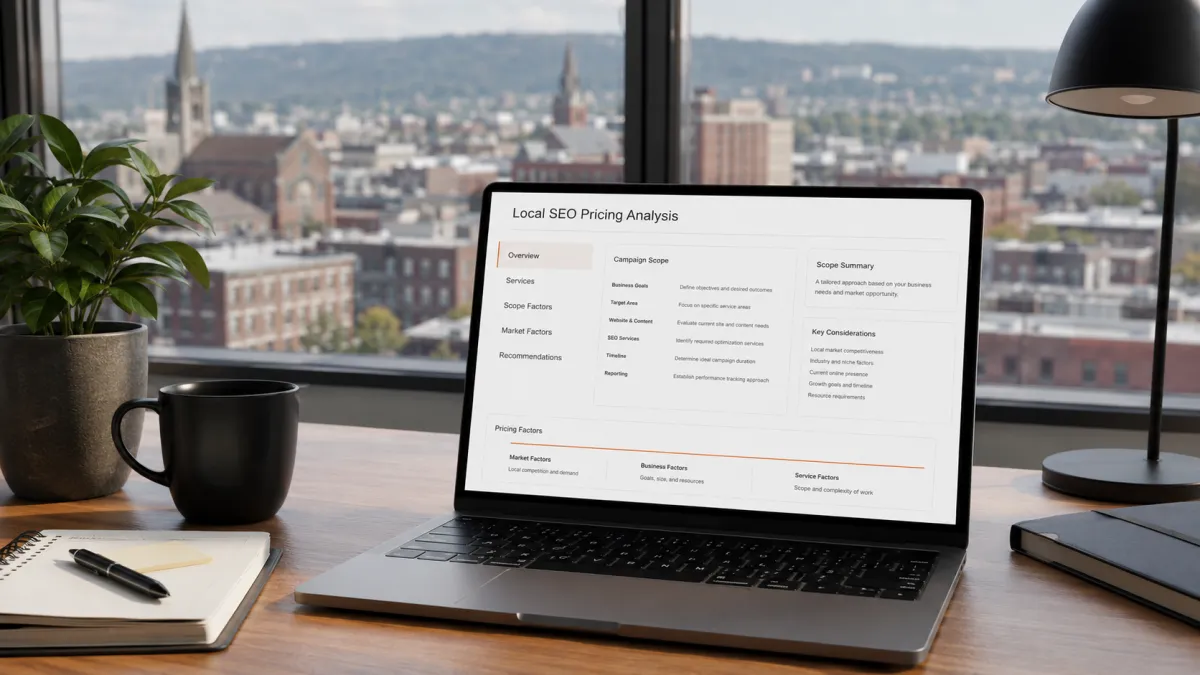
What Affects Local SEO Pricing?

Local SEO pricing changes because not every business has the same starting point.

A business with a clean website, strong reviews, accurate listings, and one location will cost less to improve than a business with a weak website, bad tracking, thin service pages, duplicate listings, and no review system.

The biggest pricing factors are:

01

Competition

  • Smaller suburbs usually need less work than competitive cities like Allentown, Bethlehem, and Easton.
  • Competitive industries need stronger pages, more reviews, better proof, and more authority.
02

Website Condition

  • Weak structure, thin service pages, and slow load speed make SEO harder.
  • Sometimes the smarter move is fixing the website before spending heavily on SEO.
03

Number of Services

  • A business with one core service usually needs fewer pages.
  • Multi-service companies often need separate pages for each profitable service.
04

Service Areas

  • A single-location business is simpler than a company targeting several cities or counties.
  • More service areas usually require more content, internal linking, and local structure.
05

Reviews

  • Google visibility is not just about keywords. Local trust signals matter.
  • If competitors have hundreds of reviews, the campaign may need a stronger review system.
06

Tracking & CRM

  • Serious campaigns should track calls, forms, booked appointments, and lead quality.
  • Without tracking, you cannot tell what is actually producing revenue opportunities.

Cheap Local SEO vs Serious Local SEO

Cheap local SEO is not always bad. It is just limited.

A cheap local SEO package may be fine if you are brand new, have a small budget, and only need the basics fixed. That usually means your Google Business Profile gets cleaned up, citations are submitted, and a few title tags or page edits are made.

The problem starts when cheap SEO is sold as a growth system.

Basic / Limited

Cheap Local SEO

Cheap local SEO is not automatically bad. It can make sense for a brand-new business, a low-competition market, or a company that only needs basic cleanup.

  • Usually includes Google Business Profile edits, citation cleanup, basic title tags, and light reporting.
  • Best for businesses that need their online foundation cleaned up before committing to a larger growth campaign.
  • The problem starts when a basic cleanup package is sold as a full lead generation system.
A $300/month campaign usually cannot build service pages, improve conversion, manage reviews, create local content, track calls, and build authority at the same time.

What Should Be Included in a Good Local SEO Campaign?

A real local SEO campaign should include more than keyword rankings.

At minimum, it should include Google Business Profile optimization, website page improvements, local keyword research, review strategy, citation cleanup, internal linking, reporting, and conversion tracking.

For Lehigh Valley businesses, the campaign should also consider local geography. Ranking in Allentown is not the same as ranking in Bethlehem, Easton, Emmaus, Whitehall, Hellertown, Nazareth, or Macungie. The website and Google profile need to send clear location signals.

A serious campaign should usually include:

01

Google Business Profile Optimization

The campaign should improve categories, services, descriptions, photos, products, Q&A, updates, and local relevance signals. For local SEO, the Google Business Profile is not optional. It is often the first asset people see before they call.

02

Service Money Pages

Each profitable service should have a focused page built around buyer intent. A contractor may need roofing, siding, gutters, windows, and storm damage pages. A dentist may need implants, emergency dentistry, Invisalign, cosmetic dentistry, and new patient pages.

03

Pricing & Cost Pages

Pricing pages help capture people searching for cost before they contact a business. These pages should explain realistic ranges, what affects price, what cheap vs serious options look like, and when the investment makes sense.

04

Comparison Pages

Strong SEO campaigns should include pages that compare options, such as SEO vs Google Ads, local SEO vs PPC, website redesign vs SEO first, or one service type vs another. These pages attract buyers who are already evaluating decisions.

05

Competitor & “Best Of” Pages

Competitor-style pages help capture searchers comparing agencies, services, or local providers. These pages should be fair, useful, and specific, not fake rankings. The goal is to enter the buyer’s research path before they choose a company.

06

Local Landing Pages

Service-area pages can help when they are useful and specific. Generic copied city pages are weak. A strong local page should include service relevance, local context, proof, internal links, and clear next steps.

07

Review Generation System

Reviews affect trust, click-through rate, and conversion. A real campaign should help the business collect reviews consistently and ethically through QR cards, follow-up texts, receptionist workflows, and automated review requests.

08

Reddit & Community Search Strategy

Search is no longer only Google. Buyers research through Reddit, forums, Facebook groups, YouTube, AI tools, and comparison searches. A strong strategy should understand where people ask questions and create content that answers those questions better.

09

Internal Linking & Site Structure

Pages should not sit isolated. Service pages, cost pages, comparison pages, location pages, case studies, and contact pages should connect logically so users and crawlers understand what the business does and where it serves.

When Is Local SEO Worth It?

Local SEO is worth it when your business has a profitable service and customers are already searching for that service.

It makes sense for dentists, medical practices, contractors, roofers, pressure washers, movers, auto detailers, med spas, landscapers, remodelers, and other service businesses where one new customer can be worth hundreds or thousands of dollars.

For example, if a roofing job is worth $8,000 to $20,000, a few extra qualified calls can justify a serious SEO investment. If a dental implant case is worth several thousand dollars, ranking for high-intent searches can matter. If an auto detailer sells ceramic coating packages for $800 to $1,500+, local visibility can directly support revenue.

Local SEO is also worth it when you are tired of depending only on paid ads. Ads can work, but costs rise. SEO gives your business an owned visibility asset over time.

That said, SEO is not instant. If you need leads this week, you may need Google Ads, Facebook Ads, or direct outbound while SEO builds.

For a deeper comparison, see below:

Local SEO Is Worth It When

  • Your service has strong profit margins. SEO makes more sense when one new customer can be worth hundreds or thousands of dollars.
  • People already search for what you sell. Dentists, roofers, contractors, movers, med spas, pressure washers, and auto detailers often benefit because buyers search before contacting a provider.
  • You can handle more calls and leads. SEO can create visibility, but the business still needs phone follow-up, form response, quoting, scheduling, and fulfillment.
  • You want long-term visibility. Paid ads can create faster lead flow, but local SEO builds an owned search asset that can compound over time.
  • Your competitors are already investing in content and reviews. If competitors have stronger pages, better Google profiles, and more reviews, ignoring SEO usually makes the gap wider.

Local SEO May Not Be Right Yet When

  • Your offer is still unclear. SEO will not fix weak pricing, unclear services, poor positioning, or an unproven business model.
  • You need leads immediately this week. SEO is not an instant lead switch. Google Ads, Facebook Ads, outbound, or referral campaigns may be needed while SEO builds.
  • Your website cannot convert traffic. If the website is slow, thin, outdated, or hard to use on mobile, fixing the website may need to come first.
  • Your sales process is broken. Missed calls, slow replies, bad quoting, and no follow-up will reduce the value of any SEO campaign.
  • The business cannot support a multi-month campaign. SEO needs enough time and consistency to build traction, especially in competitive markets.
Practical rule: SEO is strongest when the business has a profitable offer, a real market, enough margin, and a system to turn search demand into booked opportunities.

Questions to Ask Before Hiring a Local SEO Company

What specific work will be done in the first 30 days?

A serious agency should be able to explain the first phase clearly. Look for an audit, Google Business Profile review, website structure review, keyword mapping, tracking setup, page priorities, citation review, and obvious conversion fixes. Vague answers usually mean the campaign is not operationally defined.

Will you improve the website or only send reports?

Reports do not rank. Actual improvements do. A local SEO campaign should usually involve service page improvements, internal links, better headings, stronger calls to action, local proof, and better page structure. If the agency only sends monthly PDFs, the campaign may not create much momentum.

How will calls, forms, and booked opportunities be tracked?

Rankings and traffic are useful, but they are not the final goal. Ask how the agency tracks phone calls, form submissions, Google Business Profile actions, lead sources, booked appointments, and lead quality. Without tracking, you will not know whether SEO is producing real opportunities.

Do you understand my local market and service area?

A Lehigh Valley campaign should understand the difference between Allentown, Bethlehem, Easton, Emmaus, Whitehall, Nazareth, Hellertown, Macungie, and nearby service areas. Local SEO is not just adding city names to pages. The strategy should match how people search in the actual market.

What pages will you create or improve?

Ask whether the campaign includes service pages, location pages, pricing pages, comparison pages, competitor-style pages, blog content, or case study pages. A strong SEO campaign should have a clear content map, not random articles that do not support the business model.

How do you handle reviews and trust signals?

Reviews affect conversion and can support local visibility. Ask whether the agency has a review generation process, review request templates, QR code assets, follow-up workflows, or CRM automation. The campaign should help the business earn more trust without violating platform rules.

How do you decide whether SEO, ads, or website work should come first?

Not every business should start with the same service. Some need SEO. Some need Google Ads for faster demand. Some need a better website before sending more traffic. A good agency should recommend the right order based on the business, not force every company into the same package.

Can I see case studies or testimonials?

You should be able to review proof before hiring a local SEO company. Ask for testimonials, case studies, examples of client work, screenshots, pages built, or relevant results from similar businesses. An agency does not need to guarantee rankings, but it should be able to show that it has helped real businesses improve visibility, leads, or online trust.

Virsa Labs keeps client proof available through our client testimonials and case studies so business owners can review examples before starting a conversation.

Common Mistakes to Watch Out For

Mistakes cost monetary harm as well as the opportunity cost of allowing your competitors to grow ahead of you.

Avoid the following mistakes:

01

Buying the Cheapest Plan and Expecting Serious Growth

  • Low-cost SEO can handle basic cleanup, but it usually cannot build a full local acquisition system.
  • Competitive markets need content, reviews, tracking, website improvements, and authority work.
02

Focusing Only on Rankings

  • Rankings matter, but calls, forms, booked appointments, and revenue opportunities matter more.
  • A page that ranks but does not convert is still leaking business.
03

Ignoring the Website

  • Many businesses want more Google visibility while sending traffic to a weak website.
  • If the site lacks trust, proof, service clarity, mobile usability, and strong CTAs, SEO traffic will underperform.
04

Treating Reviews as Optional

  • Reviews influence trust before a buyer ever calls the business.
  • If two companies rank near each other, the one with stronger reviews often wins the click or call.
05

Publishing Generic City Pages

  • Copied city pages with swapped location names are weak and often look low-quality.
  • Strong location pages need service relevance, local context, proof, internal links, and real buyer information.
06

Not Tracking Lead Quality

  • More traffic is not the same as better business.
  • The campaign should track whether leads are local, qualified, profitable, and actually booking.
07

Creating Random Blog Posts Instead of Money Pages

  • Blog content can help, but it should support the core pages that generate business.
  • Pricing, comparison, service, location, and competitor-intent pages usually matter more for buyer searches.
08

Separating SEO From Sales Follow-Up

  • SEO can create demand, but missed calls and slow replies kill the return.
  • CRM automation, missed-call text back, follow-up sequences, and pipeline tracking help turn visibility into booked jobs.

How Virsa Labs Marketing Thinks About Local SEO Cost

Virsa Labs Marketing does not look at local SEO as just keywords, reports, or a monthly checklist. For most local businesses, the real goal is not “more traffic.” The real goal is more qualified calls, form submissions, booked appointments, estimate requests, and revenue opportunities from people already searching. That means the strategy has to connect visibility, trust, website conversion, tracking, reviews, and follow-up.

A serious local SEO campaign may include Google Business Profile optimization, service page improvements, pricing pages, comparison pages, local landing pages, internal linking, review generation, technical cleanup, call tracking, CRM automation, and conversion improvements. The right mix depends on the business, competition, current website, service area, review position, and how aggressively the company wants to grow.

The right budget should match the business model, not a generic package. A smaller business in a low-competition niche may only need foundational cleanup and a focused local presence. A dental practice, contractor, roofer, remodeler, med spa, auto detailer, or multi-location service business may need a larger campaign because the competition is stronger and the value of each new customer is higher.

Get a Local SEO Cost Breakdown for Your Business

If you are trying to figure out what local SEO should cost for your business, the right answer depends on your market, your current website, your Google Business Profile, your reviews, your service area, and your competition.

Virsa Labs Marketing can review where you are now, what is holding back visibility, and what level of campaign would actually make sense.

If you are a serious local business in Lehigh Valley or a service business looking to grow beyond referrals and ads alone, request a strategy review through the contact button below.

FAQ

How much does local SEO cost in Lehigh Valley?

Local SEO in Lehigh Valley usually costs $500 to $2,500+ per month. Basic cleanup may be a one-time project, but competitive industries usually need ongoing work.

Why does local SEO pricing vary so much?

Pricing varies because every business has a different website, review profile, competition level, service area, and growth goal. A one-location business in a low-competition niche needs less work than a multi-service contractor competing across several cities.

Is $300 per month enough for local SEO?

Usually not for serious growth. A $300/month plan may cover basic updates or reporting, but it usually will not include enough content, website work, tracking, review strategy, and authority-building to compete in a serious market.

What should be included in local SEO?

A good local SEO campaign should include Google Business Profile optimization, website improvements, service page strategy, local keyword targeting, review generation, citation cleanup, internal linking, reporting, and call or form tracking.

How long does local SEO take to work?

Many businesses need 3 to 6 months to see meaningful movement, depending on competition and starting point. Harder markets may take longer. SEO is a compounding channel, not an instant lead switch.

Is local SEO better than Google Ads?

Neither is automatically better. Local SEO is stronger for long-term visibility and trust. Google Ads is better for faster lead flow. Many local businesses use both, especially when they want leads now while SEO builds.

Should I invest in SEO if my website is outdated?

Not heavily. If your website is weak, slow, thin, or hard to use on mobile, fixing the website may need to come first. SEO traffic is less valuable if the site cannot convert visitors into leads.

Does local SEO include Google Business Profile optimization?

It should. For local businesses, the Google Business Profile is one of the most important assets. If an SEO company ignores it, that is a warning sign.

Can local SEO help service-area businesses?

Yes. Contractors, roofers, detailers, movers, pressure washers, and other service-area businesses can benefit from local SEO when the campaign targets the right services and cities with a strong website and Google profile strategy.

How do I know what budget is right?

Start with your competition, average customer value, service area, and current online presence. If one new customer is worth thousands, a stronger campaign may make sense. If your business is still early or low-margin, start with foundational cleanup.

Schedule an appointment today!

About the author:

Harjot Dehal

M.S. & B.S. Computer Science | Local SEO & Paid Ads Specialist

Harjot Dehal helps dental practices, medical practices, and local service businesses grow through SEO, paid ads, website strategy, CRM automation, and review systems. He has helped build Virsa Labs Marketing into a multi six-figure agency serving businesses across the U.S., including healthcare practices, home service companies, auto shops, roofers, gyms, spas, and other local businesses.

Harjot holds both a Master’s and Bachelor’s degree in Computer Science and brings a technical, systems-driven approach to local marketing. He also creates weekly YouTube content and hosts The Local Dental SEO Playbook, where he breaks down practical strategies for dental SEO, Google Maps, AI search, paid advertising, and patient acquisition.

All rights reserved | Virsa Labs Marketing Lehigh Valley LLC © 2026