01
Keep It Short & Fast
Your first response should prioritize speed over depth. A rapid, clear acknowledgment keeps the lead engaged and prevents prospects from clicking over to a competitor's site.
Virsa Labs Marketing »Speed to Lead for Service Businesses

Local SEO Services
SEO in Lehigh Valley
Local SEO in Lehigh Valley
Website Development
CRM Automation
Case Studies
Client Testimonials
Book a Strategy Review
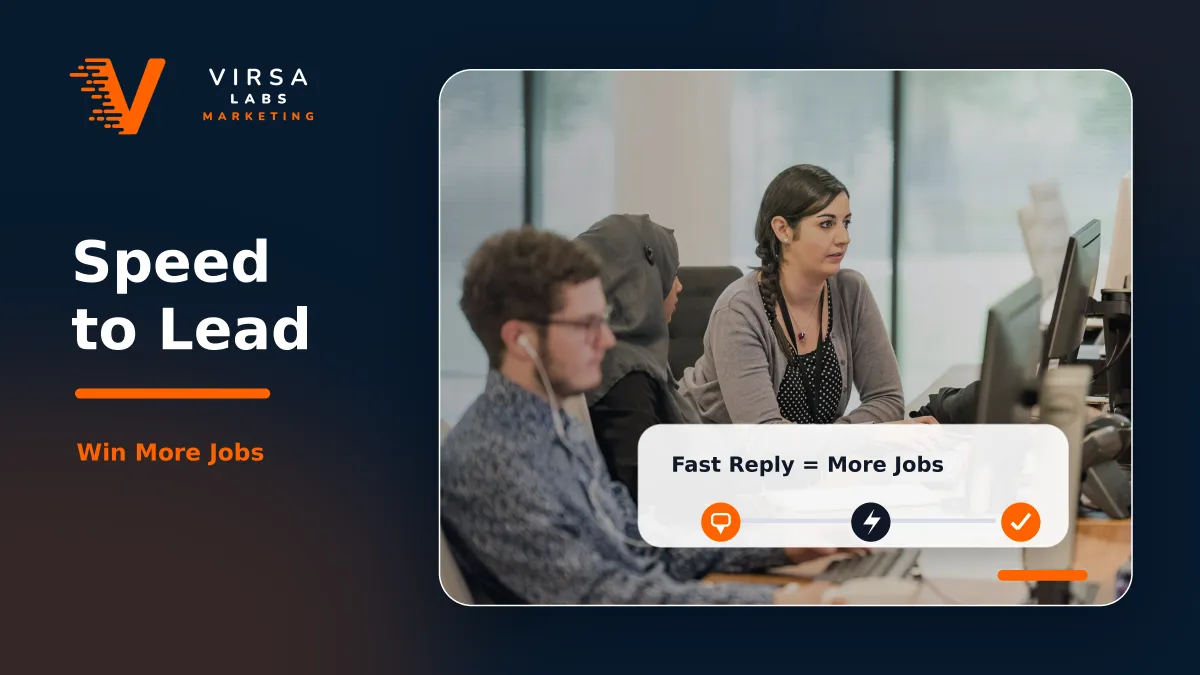
Speed to lead means how quickly your business responds after someone calls, submits a form, sends a message, or requests a quote. For service businesses in the Lehigh Valley, it matters because many customers contact several companies at the same time. The business that responds first usually gets the best chance to control the conversation, answer questions, and book the job before competitors follow up.
This is especially important for contractors, auto detailers, roofers, pressure washing companies, movers, and other local service businesses where buyers often need help quickly.
Key Takeways
A fast first response can turn the same number of leads into more booked jobs without increasing ad spend.
Missed calls, slow form replies, and after-hours messages are common places where local service businesses lose revenue.
Automation should not replace real sales conversations, but it should keep leads warm until someone can respond.
Speed to lead works best when paired with clear follow-up, call tracking, CRM organization, and a simple booking process.
Speed to lead usually breaks down in predictable places. The issue is rarely that the business does not care. More often, the owner or team is working in the field, handling customers, driving between jobs, or trying to manage too many channels at once.
The biggest leak is missed calls. For many service businesses, phone calls are still the highest-intent leads. When someone calls, they are usually closer to booking than someone casually browsing a website. If no one answers and there is no fast follow-up, that lead may be gone within minutes.
Website forms are another common problem. Many businesses have quote forms that send an email notification, but nobody sees the email quickly. By the time the business replies, the customer has already scheduled with someone else. A form should trigger an instant confirmation, a team alert, and ideally a CRM record so the lead does not get buried.
Messages from Google Business Profile, Facebook, Instagram, and website chat can also create confusion. These leads come in from different places, and each platform has its own inbox. Without one central process, it becomes easy to miss messages or respond inconsistently.
After-hours leads are another missed opportunity. Many homeowners search in the evening after work. If your business only responds during business hours, you may still need an automated message that confirms the request and sets expectations for the next step.
| Lead Source | Common Problem | Better System |
|---|---|---|
| Missed phone calls | Customer calls another provider immediately | Missed-call text back with a simple question |
| Website quote forms | Form submission sits in an inbox for hours | Instant confirmation plus team notification |
| Google Business Profile messages | Message gets missed or answered late | Centralized inbox or CRM alert |
| Facebook or Instagram messages | Inconsistent replies from different devices | Saved replies and lead tracking |
| After-hours inquiries | No response until the next day | Automated reply with booking or quote instructions |
The fix is not always complicated. Start by identifying where leads enter the business, who is responsible for responding, and what happens if that person is unavailable. A simple lead-handling process is often enough to recover jobs that were previously slipping through the cracks.
A great customer response framework does not need to be long. It needs to be fast, clear, and actionable to keep sales conversations moving forward instead of letting opportunities go cold.
Your first response should prioritize speed over depth. A rapid, clear acknowledgment keeps the lead engaged and prevents prospects from clicking over to a competitor's site.
Avoid rigid, robotic text templates. Customers want to know they are dealing with a real business representative who is attentive and ready to address their specific project problem.
Do not overwhelm the prospect. Ask for a single, critical project detail—like location, vehicle size, or service type—to easily map out the next stage of the consultation.
Saying “We will get back to you soon” provides zero momentum. It leaves the customer hanging and forces them to keep searching for alternative service providers.
Use active framing: “Thanks for reaching out! What city is the project in, and are you looking for a structural repair or a full replacement estimate?” This makes responding seamless.
An immediate interaction shows your business is functional and responsive. It builds instant authority and makes your brand the path of least resistance for busy consumers.
No matter how much you invest in Google Ads or Local SEO, your actual conversion rate depends on your follow-up speed. More traffic cannot fix a broken booking process.
Local competitors in Allentown, Bethlehem, and Easton often rely on slow emails or delayed voicemails. A fast, polished text strategy creates an immediate regional edge.
Fix your system layout before scaling ad spend. Optimize every digital touchpoint to capture attention instantly, capture key lead metrics, and book high-value jobs cleanly.
If your business is getting calls, form submissions, or messages but not converting enough of them into booked work, the issue may not be lead volume. It may be response speed, follow-up, or tracking.
Virsa Labs Marketing helps Lehigh Valley and U.S.-based service businesses build practical marketing systems across SEO, paid ads, websites, CRM automation, call tracking, and lead generation. If you want a clearer system for capturing and following up with leads, contact Virsa Labs Marketing.
Speed to lead is the amount of time it takes your business to respond after a potential customer reaches out. This could include phone calls, missed calls, website forms, Google Business Profile messages, social media messages, or quote requests. The faster the response, the better chance you have to keep the customer engaged.
A strong target is five minutes or less, especially for calls, quote requests, and high-intent messages. Not every response needs to be a full estimate. Even a quick confirmation or follow-up question can keep the lead from contacting another business.
Yes, if it is used correctly. Automation should acknowledge the lead, ask a simple question, or set expectations until a real person can respond. It should not try to replace the full sales conversation or send long generic messages.
Contractors, roofers, auto detailers, pressure washing companies, movers, medical practices, dental offices, and other local service businesses can all benefit. Any business where customers compare multiple providers before booking should pay close attention to response time.
Price matters, but speed and professionalism often shape who gets the first serious conversation. Many customers choose the business that responds clearly, answers questions, and makes scheduling easy. A slow response can make even a strong offer feel unreliable.
Start by reviewing missed calls, form submissions, message response times, and unclosed quote requests. If leads are sitting for hours without a response or there is no clear follow-up process, speed to lead is likely costing you jobs. Call tracking and CRM reporting can make this much easier to see.