Recognize High Intent
Leads looking for roof repairs, detailing, or emergency services are ready to buy. They aren't browsing; they are seeking a solution immediately.
Local SEO Services
SEO in Lehigh Valley
Local SEO in Lehigh Valley
Website Development
CRM Automation
Case Studies
Client Testimonials
Book a Strategy Review
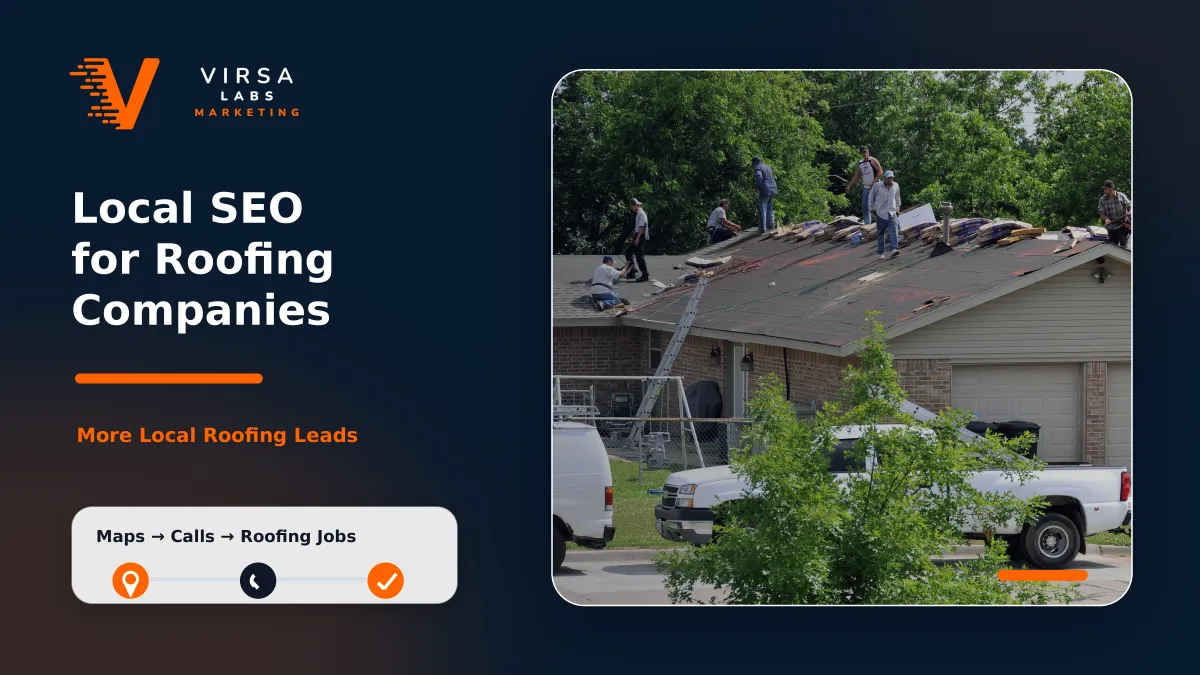
When a homeowner needs roof repair, roof replacement, storm damage help, or emergency leak service, they usually search Google before they call anyone. They are not looking for a roofing company “someday.” They usually have an active problem, a project they are pricing, or damage they need handled quickly.
That is why local SEO matters for roofing companies. If your company does not show up for searches like “roofer near me,” “roof repair Bethlehem,” “roofing company Allentown,” or “emergency roof leak Easton,” those calls usually go to the companies already ranking in Google Maps and local search.
For roofers in Lehigh Valley, local SEO is not just about getting website traffic. The real goal is to appear in front of homeowners at the exact moment they are looking for roofing help, then give them enough trust to call, request an estimate, or submit a form.
Virsa Labs Marketing helps local service businesses improve visibility through Local SEO, websites, review systems, call tracking, and lead generation.
Key Takeways
Roofing SEO works best when your Google Business Profile, website, reviews, project photos, and service area content all support each other.
Homeowners searching for roofers often have high buying intent, especially for roof repair, roof replacement, storm damage, and emergency roofing.
Lehigh Valley roofers should build visibility around both service keywords and city-based searches like Bethlehem, Allentown, Easton, and nearby areas.
The roofing companies that win local search usually have more proof, clearer service pages, stronger reviews, and better tracking than their competitors.
Service business leads are high-intent—they are ready to make a decision. If your response process is slow or casual, you aren't just missing a lead; you are handing the customer to your competitor. This checklist ensures your response system is as strong as your marketing.
Leads looking for roof repairs, detailing, or emergency services are ready to buy. They aren't browsing; they are seeking a solution immediately.
Treating leads casually—like checking forms the next morning—is a fatal error. Speed signals that your business is organized and ready to work.
The first response creates the relationship. By responding within minutes, you establish professionalism before price or logistics are even discussed.
If you respond in two minutes, you can explain your process, offer time windows, and move toward booking before the competitor even knows the lead exists.
Local SEO and Google Ads are only half the battle. You must ensure the response process can handle the volume of leads those channels generate.
If bookings are weak, stop blaming ads. Analyze your response speed, follow-up habits, and sales handling to see where the bucket is leaking.
A good speed-to-lead system does not need to be complicated. It needs to be fast, consistent, and connected to the way your business actually books jobs.
The first piece is instant confirmation. When someone fills out a form, calls, messages, or requests a quote, they should receive a response right away. This does not need to be aggressive. It just needs to confirm that the request was received and move the conversation forward.
For example, a simple form response could say:
“Thanks for reaching out. We received your request. What day works best for us to take a quick look and give you the next step?”
That is better than a generic “we will get back to you soon” because it creates a reply path.
The second piece is missed call text back. If someone calls and your team misses it, an automatic text should go out immediately. This keeps the lead alive while the customer is still actively looking.
The third piece is internal notification. Someone on the team needs to know a lead came in. That notification can go to the owner, office manager, salesperson, or whoever handles bookings. The point is simple: no lead should sit unnoticed.
The fourth piece is follow-up. A lead that does not respond immediately should not be ignored. A practical follow-up sequence might include a same-day reminder, a next-day check-in, and a later message with proof, reviews, or examples of similar work.
The fifth piece is tracking. If you do not know where leads are coming from, you cannot improve the system. Call tracking and CRM source tracking help identify whether leads came from SEO, ads, Google Business Profile, Facebook, referrals, or another source
| Lead Source | Common Problem | Better Response System | Expected Outcome |
|---|---|---|---|
| Missed Phone Call | Customer calls another company immediately. | Instant missed call text-back system plus team alert. | Captures the lead before they move to a competitor. |
| Website Form | Email notifications get buried in busy inboxes. | CRM entry, instant SMS, and automated follow-up sequence. | Guaranteed, consistent follow-up process. |
| FB Lead Form | Lead forgets they submitted the form. | Immediate text/call attempt and reminder sequence. | Higher contact and conversion rates. |
| Google Business Profile | No tracking or attribution for calls. | Call tracking number and source reporting. | Data-driven ROI on local search efforts. |
| Social Messages (IG/FB) | Messages sit unread or lost in platform DMs. | Centralized inbox or CRM notification workflow. | Faster response times and organized history. |
The goal is not to replace human sales. The goal is to make sure human follow-up happens faster and more consistently.
Before you scale your SEO or paid ads, fix the holes in your bucket. Most leads are lost not because they aren't interested, but because the response process is too slow or non-existent.
If you miss a call, the lead is usually gone. Set up a text-back system that sends an automatic, personal message immediately after a missed call to capture conversations that would otherwise disappear.
Stop relying on email notifications that get buried. Every form submission must automatically create a contact in your CRM, notify your team, and trigger the first response.
Don't use generic messaging. A roofing inquiry requires a different tone and priority than a basic pressure washing wash. Specificity makes it easier to move the customer forward.
Automate your initial engagement. Within minutes of a lead coming in, the system should acknowledge the request and set expectations for the next step.
If there is no reply to your initial contact, initiate a same-day follow-up. This keeps the momentum going without appearing pushy.
People get busy. Use a next-day automated check-in to re-engage prospects who may have forgotten to reply or are still in the comparison phase.
If they still haven't booked, use your later follow-ups to send social proof: customer reviews, project photos, or case studies to build trust.
Review your call answer rates, response times, and booking ratios. Data reveals whether your issue is a marketing traffic problem or a sales process bottleneck.
If leads are coming in but bookings are weak, don't buy more ads. Fix the response speed, follow-up, or sales handling first.
If your business is getting calls, form submissions, or ad leads but too many are slipping through, the response system needs to be tightened.
Virsa Labs Marketing builds websites, CRM automations, call tracking, follow-up systems, and lead generation systems for local service businesses that need more than just traffic.
Contact Virsa Labs Marketing to review where leads are being lost and what should be fixed first.
Speed to lead means how quickly your business responds after a potential customer contacts you. This can include phone calls, missed calls, website forms, Facebook leads, Google Business Profile calls, chat messages, or quote requests. Faster response times usually give your business a better chance of booking the job.
A service business should ideally respond within a few minutes. The longer the delay, the more likely the customer is to contact and book with another company. Even if you cannot give a full answer immediately, an instant confirmation message helps keep the conversation active.
No. Automation should not replace real sales follow-up. It should make sure the lead gets an immediate response and that your team is notified quickly. For most service businesses, the best system combines instant automation with a real person calling or texting as soon as possible.
Missed call text back is an automation that sends a text message when your business misses a call. For example, if someone calls and no one answers, the system can immediately send a message asking how you can help. This helps recover leads that would otherwise call the next business.
Yes. SEO can help your business get found, but the lead still needs to be handled properly. If someone finds your business on Google and calls, submits a form, or requests a quote, slow follow-up can waste the opportunity. Strong SEO and strong lead response should work together.
Track missed calls, answered calls, form submissions, response time, booked appointments, and lead source. This shows whether the issue is lead volume, lead quality, or follow-up. Businesses often discover they do not need more leads first; they need to stop losing the ones they already get.