Virsa Labs Marketing »Dental SEO Service Pages

Dental SEO Service Pages: How Dental Practices Rank for High-Intent Treatment Searches

Harjot Dehal, Local SEO and Paid Ads Specialist

Author: Harjot Dehal | M.S. & B.S. Computer Science

Local SEO & Paid Ads Specialist

Local SEO Services

SEO in Lehigh Valley

Local SEO in Lehigh Valley

Website Development

CRM Automation

Case Studies

Client Testimonials

Book a Strategy Review

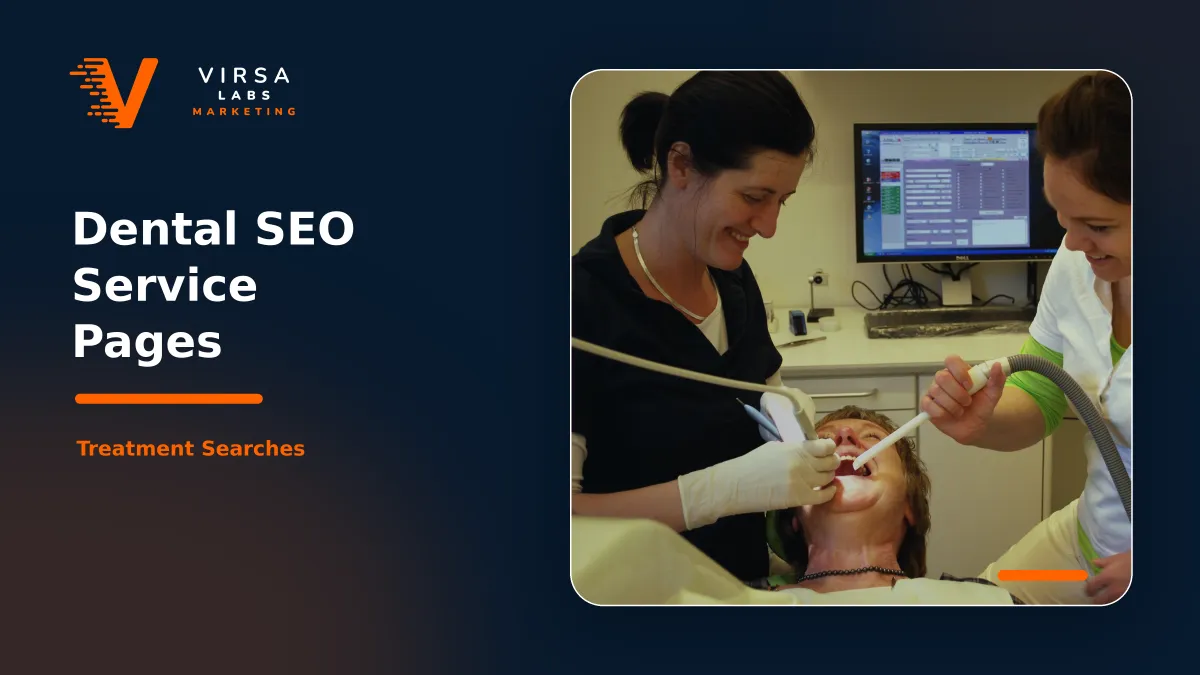
Dental SEO Service Pages

Dental SEO service pages help practices rank for specific treatment searches like “dental implants Bethlehem,” “Invisalign Allentown,” and “emergency dentist near me.” Instead of relying on one broad services page, a dental website should have dedicated pages for the procedures patients are actively searching for.

For Lehigh Valley dental practices, this matters because high-intent searches usually come from people who already know what they need. A strong service page can explain the treatment, build trust, connect the page to local search intent, and make it easier for the patient to request an appointment.

Key Takeways

  • A single general services page is usually too broad to rank well for specific dental treatments.

  • Dedicated service pages help Google and patients understand exactly what your practice offers.

  • Local signals like Bethlehem, Allentown, Easton, and Lehigh Valley references should be used naturally, not stuffed.

  • The best dental SEO pages combine patient education, clear structure, trust signals, and a simple appointment CTA.

Why One General Services Page Usually Holds Dental SEO Back

01

The All-in-One Service Page Flaw

  • Grouping implants, Invisalign, whitening, and root canals on a single page hurts organic search visibility.
  • While it appears simplified for basic navigation, it dilutes the thematic authority required to rank for specific terms.
02

Targeted High-Intent Searches

  • Patients do not run generic searches; they search for exact geographic solutions like "dental implants Bethlehem PA."
  • A parent looking for rapid emergency relief will explicitly look for localized phrases like "emergency dentist near me."
03

Capturing Unique User Intent

  • Different search keywords demand entirely unique messaging, distinct conversion paths, and varied technical depth.
  • A generalized services overview cannot provide the comprehensive detail required to convert specific buyer groups.
04

Dedicated Landing Page Architecture

  • Dedicated service pages give complex clinical treatments a conversion-optimized, keyword-focused home.
  • These targeted pages give crawling search engine bots an unambiguous entity match for complex dental queries.
05

Winning Competitive Treatment Niches

  • Isolating high-value procedures is essential to winning competitive areas like cosmetic veneer services.
  • High-intent patients are actively comparing proximity, reviewing local proof, and deciding which office to call.
06

Hub-and-Spoke Content Silos

  • A modern dental architecture connects core landing assets to deeper sub-pages built for specialized commercial intents.
  • Virsa Labs frames broader campaigns like Dental Marketing Lehigh Valley while building clean, supporting service pages.

What a Strong Dental SEO Service Page Should Include

A strong dental service page should be written for patients first and search engines second. The page needs to answer real questions clearly, not just repeat keywords.

Start with a direct explanation of the treatment. A dental implants page should explain what implants are, who they may help, and why someone might choose them over other options. An Invisalign page should explain how clear aligners work, who may be a candidate, and what the process usually involves.

The page should also address decision-making concerns. Patients want to know whether the treatment is painful, how long it takes, what recovery looks like, whether multiple appointments are needed, and how to schedule a consultation. You do not need to turn the page into a medical textbook, but you do need enough detail to build confidence.

A useful structure looks like this:

Page Element Purpose Example
Treatment overview Explains what the service is and who it helps to set clear user context immediately. “Dental implants replace missing teeth with a long-term restoration option.”
Patient fit Helps visitors self-identify with specific symptoms or clear treatment goals. “This may be an option if you are missing one tooth, several teeth, or wear dentures.”
Process section Reduces user uncertainty and operational anxiety by breaking down clinical timelines. “Consultation, digital imaging, treatment planning, precision placement, and restoration.”
Local relevance Connects the core medical service explicitly to nearby local search areas. “Proudly serving patients from Bethlehem, Allentown, Easton, and the surrounding Lehigh Valley.”
FAQ section Answers targeted buyer questions and commercial objections before they call the front desk. “How long does Invisalign take?” or “When should I call an emergency dentist?”
CTA Makes the absolute next step obvious to guide ready prospects to book immediately. “Request an appointment online” or “Schedule a complimentary consultation.”

The page should also include trust signals where they fit naturally. This can include doctor credentials, years of experience, technology used, patient reviews, before-and-after galleries where appropriate, or links to case studies and testimonials. Virsa Labs uses this same practical approach when building SEO and conversion systems through Local SEO, website development, and CRM follow-up systems.

The biggest mistake is creating pages that are technically separate but not meaningfully different. If every service page has the same intro, same layout, and only swaps the keyword, it will feel weak to both users and search engines. Each page should be written around the patient’s actual questions for that treatment.

How to Add Local Signals Without Making the Page Sound Forced

Local SEO Strategy

Building Clean Local Relevance Without City Stuffing

Dental SEO is local by nature. High-intent patients look for care near home, meaning service pages must balance explicit geographical signals with a natural, authoritative reading experience.

01

Establish Natural Proximity

Frame your core service areas transparently right away. A quality dental implants page should naturally note that the clinical practice welcomes patients throughout Bethlehem, Allentown, Easton, and the surrounding Lehigh Valley communities.

02

Explain Why Proximity Matters

Connect physical location directly to patient benefit. Emphasize why local convenience matters for multi-stage implant follow-up appointments, sudden restorative emergency needs, and seamless ongoing family dental care.

03

Avoid Keyword & City Stuffing

Protect your brand reputation and search engine trust. Mechanically repeating rigid local strings across your body copy destroys readability, increases bounce rates, and signals low-quality automated optimization to crawling bots.

04

Distribute Local Signals Cleanly

Integrate geo-modifiers contextually into high-value elements. Weave structural phrases into your title tags, clean meta descriptions, intuitive image alt text, and contextual internal anchor paths rather than force-feeding body text.

05

Leverage Geo-Targeted FAQs

Address geographical logistics within customer-centric FAQs. Use natural questions like “Do you see Invisalign patients from Allentown?” or “Can I book an emergency dental visit if I live near Bethlehem?” to match exact long-tail search behaviors.

06

Weave a Hub-and-Spoke Mesh

Connect your core marketing architecture systematically. Ensure specific service elements anchor smoothly back to your parent service hubs, dedicated neighborhood location landing systems, and broader search strategies.

07

Isolate Logical Inter-Linking

Guide patients naturally between highly clinical medical treatments. Craft logical internal pathways between structural implant pages and related high-intent hubs like advanced cosmetic dentistry, restorative care, or emergency services.

08

Maintain Real-World Honesty

Build unshakeable local credibility across multiple nearby cities. Never falsely claim a physical operational storefront exists where it does not; clearly state your true home base location while highlighting the areas you serve.

How Dental Practices Should Prioritize Which Service Pages to Build First

01

Prioritize by Clinical & Business Value

  • Avoid building dozens of thin pages; target core, high-margin revenue drivers based on practice goals first.
  • Focus heavily on competitive procedures like dental implants, clear aligners, and advanced cosmetic dentistry.
02

Map the Speed of Patient Intent

  • Emergency dental queries signals urgent, immediate intent where users convert rapidly due to acute pain.
  • Implant or Invisalign research cycles take longer, requiring educational depth to secure high-value cases.
03

Evaluate Existing Technical Health

  • If your foundation is slow, broken, or outdated, launching new service pages alone will not fix low conversions.
  • Ensure technical structure, UX stability, and domain authority support new landing page expansions.
04

Adopt an Operator’s Mindset

  • A high search ranking is useless if the target page fails to convert anonymous traffic into incoming calls.
  • Incorporate highly visible phone numbers, simple sticky forms, and zero-friction appointment booking buttons.
05

Unify Tracking & Automation Silos

  • Virsa Labs Marketing weaves search visibility directly into call tracking, active CRMs, and front-desk workflows.
  • Isolate exactly which organic terms or regional service pages drive physical revenue to stop lead leakage.
06

Diagnose Traffic vs. Booking Leaks

  • High traffic with zero patient booking points to weak calls-to-action, slow page speeds, or poor trust proof.
  • Low visibility across the board reveals missing service categories, thin copy blocks, or damaged site mapping.
07

Execute a Practical Build Order

  • Repair global code structural issues, optimize the homepage, and deploy core treatment-level spokes.
  • Inject natural geographical signals, interlink systemic nodes, and monitor matching form submission sources.
08

Scale Operations Sustainably

  • Align long-term search updates with active physical capacity, provider skills, and daily business metrics.
  • Continuous monitoring reveals which service hubs actively scale production line efficiency across the brand.

CTA Section

If your dental website only has one broad services page, you may be missing high-intent searches for the treatments your practice actually wants to grow.

Virsa Labs Marketing helps dental practices build SEO-focused websites, service pages, local search systems, and follow-up processes that support patient growth without relying on guesswork.

To review your current dental service-page structure, contact Virsa Labs Marketing.

FAQ

How many dental service pages should a practice have?

Most practices should have a dedicated page for each important treatment they offer, especially services patients actively search for. That may include implants, Invisalign, emergency dentistry, cosmetic dentistry, whitening, crowns, veneers, and root canals. The goal is not to create as many pages as possible. The goal is to create useful pages for services that matter.

Can one dental services page rank for every treatment?

It is possible for a broad services page to rank for some general searches, but it is usually not the best approach for treatment-specific keywords. A page focused only on dental implants is more relevant to an implant search than a page that briefly lists implants among 20 other services. Search engines and patients both benefit from clearer, more focused pages.

Should dental service pages mention local cities?

Yes, but the city references should be natural. A page can mention that the practice serves patients in Bethlehem, Allentown, Easton, and the Lehigh Valley, but it should not repeat city names unnaturally. Local signals work best when they support helpful content instead of replacing it.

Do dental service pages need FAQs?

FAQs are useful because they answer common patient concerns and can improve the depth of the page. Good FAQs address questions about treatment timelines, candidacy, recovery, cost factors, scheduling, and location. The answers should be clear and honest rather than stuffed with keywords.

How long should a dental SEO service page be?

A strong service page is usually long enough to explain the treatment, answer common questions, show local relevance, and guide the patient to the next step. Many effective pages are between 800 and 1,500 words, depending on the treatment. More words do not automatically mean better SEO; useful detail matters more.

Schedule an appointment today!

About the author:

Harjot Dehal

M.S. & B.S. Computer Science | Local SEO & Paid Ads Specialist

Harjot Dehal helps dental practices, medical practices, and local service businesses grow through SEO, paid ads, website strategy, CRM automation, and review systems. He has helped build Virsa Labs Marketing into a multi six-figure agency serving businesses across the U.S., including healthcare practices, home service companies, auto shops, roofers, gyms, spas, and other local businesses.

Harjot holds both a Master’s and Bachelor’s degree in Computer Science and brings a technical, systems-driven approach to local marketing. He also creates weekly YouTube content and hosts The Local Dental SEO Playbook, where he breaks down practical strategies for dental SEO, Google Maps, AI search, paid advertising, and patient acquisition.

Client Showcase

Auto-Moving Logo Slider
Auto-Moving Logo Sliders

All rights reserved | Virsa Labs Marketing Lehigh Valley LLC © 2026