01
Identify High-Intent Pages
Deploy your chatbot primarily on core conversion zones like primary service pages, quote requests, pricing details, and transactional landing pages where visitors already demonstrate an intent to act.
Virsa Labs Marketing »AI Chatbots for Service Business Lead Generation

Local SEO Services
SEO in Lehigh Valley
Local SEO in Lehigh Valley
Website Development
CRM Automation
Case Studies
Client Testimonials
Book a Strategy Review
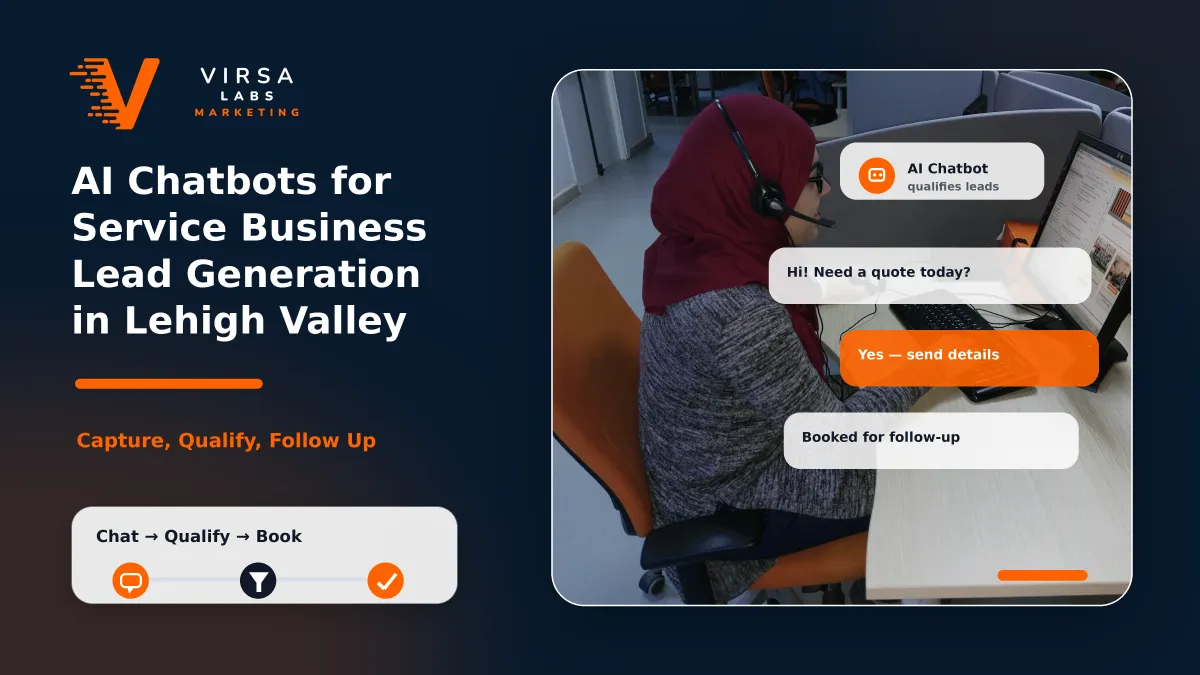
AI chatbots can help service businesses capture more website leads by responding instantly, collecting contact information, answering common questions, and guiding visitors toward booking or requesting a quote. For dentists, contractors, auto detailers, home service companies, and local businesses in Lehigh Valley, chatbots are most useful when they support a real lead generation process instead of acting like a gimmick on the website.
A chatbot should not replace your team. It should help your business respond faster, capture missed opportunities, and make follow-up easier.
Key Takeways
AI chatbots work best when they are built around real customer questions, service intent, and booking actions.
A chatbot should collect useful lead information without making the visitor feel trapped in a long form.
The biggest value comes from connecting chatbot conversations to CRM follow-up, not just adding a chat bubble to the website.
Service businesses should use chatbots carefully so they improve trust instead of creating robotic or confusing experiences.
A good chatbot should collect enough information to help your team follow up properly. It should not ask unnecessary questions or make the visitor feel like they are filling out a long intake form.
The best structure is simple: understand the need, capture contact information, confirm location or service area, and move the visitor toward the next step.
For example, a roofing company may need to know whether the customer needs repair, replacement, inspection, or emergency help. A moving company may need pickup location, destination, move date, and home size. A dental office may need to know whether the person is a new patient, what service they are looking for, and whether they want to request an appointment.
The chatbot should be designed around how the business actually sells and schedules work.
| Chatbot Question Area | Why It Matters | Example for a Service Business |
|---|---|---|
| Service needed | Helps qualify the lead quickly by determining operational scope. | “What type of project or service package do you need help with?” |
| Location or service area | Confirms whether the business can serve the user's regional area. | “What city or zip code is your property located in?” |
| Urgency | Helps prioritize immediate dispatch versus standard scheduling workflows. | “Do you need help today, sometime this week, or later?” |
| Contact information | Allows the internal office team to reach out and follow up directly. | “What is the best name, phone number, and email to reach you?” |
| Preferred next step | Moves the lead cleanly toward an active, structural booking opportunity. | “Would you prefer a direct call, a quote request, or a site consultation?” |
The chatbot should also be honest about what it can and cannot do. If the question needs a human answer, the chatbot should say that the team will follow up. This is especially important for businesses where pricing, scheduling, medical questions, or project details require judgment.
The mistake many businesses make is treating a chatbot like a novelty. They install a generic widget, leave the default script in place, and expect it to produce serious leads. That usually creates weak conversations.
A better approach is to build the chatbot around the business’s actual sales process. What questions does the front desk ask? What information does the estimator need? What stops people from booking? Those answers should shape the chatbot flow.
An AI chatbot should support the page, not take over the page. Implementing conversational touchpoints strategically ensures that you guide high-intent local traffic toward conversion without breaking user trust or hurting usability.
Deploy your chatbot primarily on core conversion zones like primary service pages, quote requests, pricing details, and transactional landing pages where visitors already demonstrate an intent to act.
Tailor your automated interaction options carefully. A pressure washing asset should present options for house washing or driveways, while a dental practice must quickly highlight emergency care or new patient processes.
Time the chat prompt window accurately. The widget should appear organically when it can assist the reader to take the next programmatic action step rather than interrupting them the split second they land on the screen.
Never hide secondary contact methods behind the automation shell. Visitors must always maintain immediate, clear access to your primary phone number, standard forms, and main navigation paths.
Keep your operational chat trees brief and practical. Avoid running loops that repeat messaging scripts, drop overly vague answers, or weigh down an eager prospect with a wall of consecutive diagnostic questions.
Do not force a machine script to configure complex, variable property estimates or handle highly sensitive clinical concerns. Use automated prompts strictly for first contact, simple qualification, and lead routing.
Maintain brand credibility across local markets. Set up your automated systems to sound professional and clear without ever pretending to be a live human operator or using manipulative, fake urgency scripts.
Remember that chat widgets cannot mask structural page failures. Ensure your interface features fast loading speeds, clean layout frameworks, and optimized service descriptions designed for regional lead generation.
The final win relies on operational responsiveness. Once the website asset handles initial qualification, pass the details immediately to a real staff member to lock in the booked opportunity via a personal touchpoint.
If your website gets traffic but too many visitors leave without contacting you, an AI chatbot may help capture more of those opportunities.
Virsa Labs Marketing helps Lehigh Valley service businesses build practical lead generation systems using websites, SEO, paid ads, CRM automation, review systems, call tracking, and follow-up workflows.
Start with a clear plan before adding more tools.
Contact Virsa Labs Marketing to review your website lead capture and follow-up process.
Yes, they can generate leads when they are set up properly. A chatbot works best when it asks useful questions, collects contact information, and sends the lead into a follow-up system. It should support the sales process, not replace it.
No. A chatbot should not replace your contact form, phone number, or booking link. It should give visitors another easy way to take action, especially when they have a quick question or visit outside business hours.
Chatbots can work well for contractors, roofers, pressure washing companies, moving companies, auto detailers, dental practices, medical practices, and other local service businesses. The setup should be customized to the services, customer questions, and booking process of each business.
Yes, many chatbot systems can connect to CRM platforms. This allows new leads to be stored, assigned, followed up with, and tracked more easily. The CRM connection is often what makes the chatbot valuable beyond the first conversation.
It can hurt the experience if it is too aggressive, confusing, or poorly written. A good chatbot should be easy to close, helpful when needed, and aligned with the page content. Visitors should still be able to call, read, submit a form, or browse normally.
It depends on the business. Live chat can be better when a trained person is available to respond quickly. AI chatbots are useful when the business needs after-hours coverage, basic qualification, and automated lead capture. Many businesses benefit from using both in the right way.